

Need assistance? Contact Customer Support

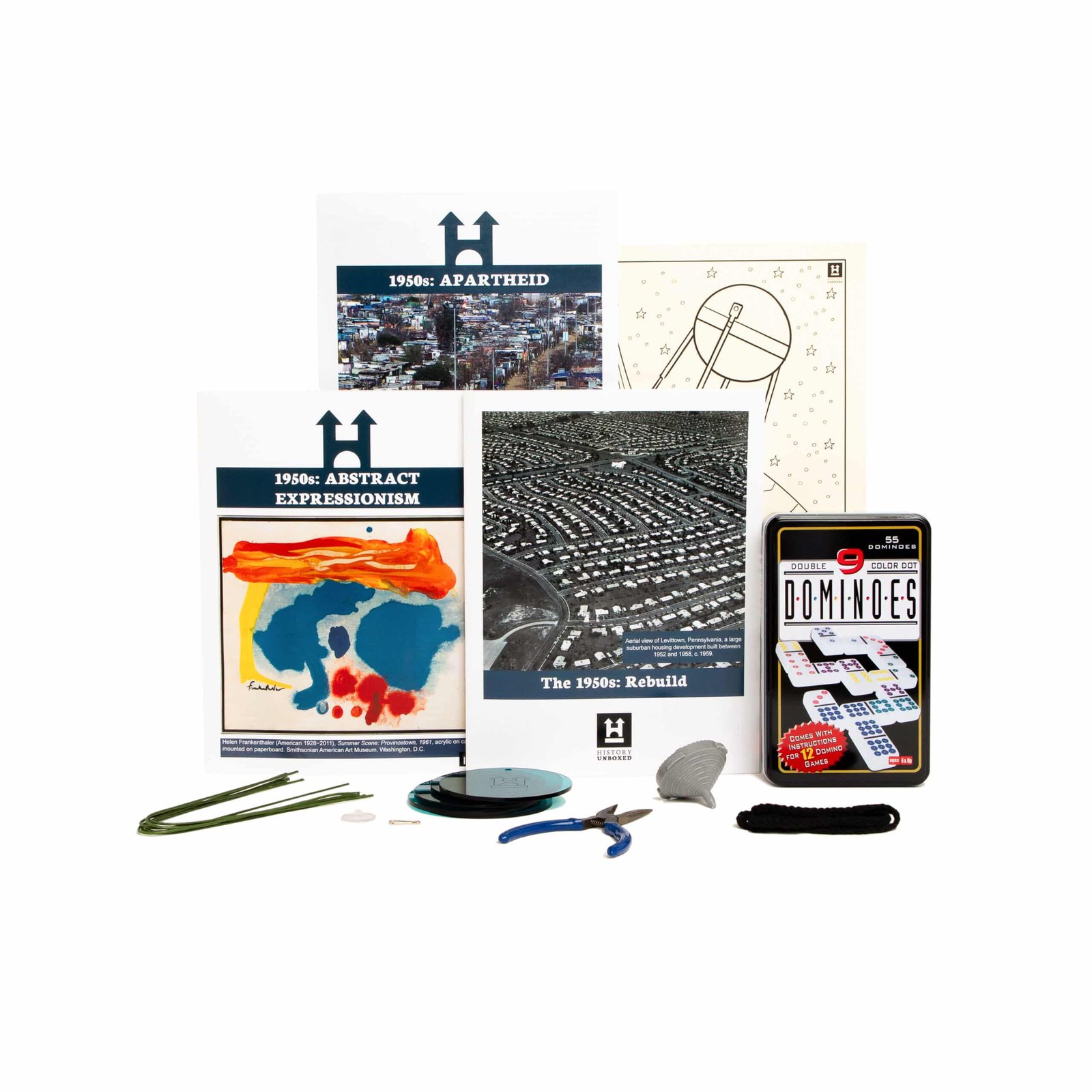
*In stock boxes will ship in approximately three weeks. For the status of a particular box, please email hello@historyunboxed.com.
Please note that if any items are missing from your order due to low stock, a Note to Buyer will be included on your order and tracking number stating which items will ship separately when available. This will apply to both UPS and USPS tracking numbers!
Are you purchasing for a classroom, large family, or co-op? Please contact us for special pricing on orders of 5+!
Are you ordering with charter funds? Check out our charters page for more information!
Our high-quality hands-on history kits bring civilizations to life for learners of all ages. Each history box has everything you need for engaging history lessons. Our boxes can serve as a stand-alone history curriculum or paired with traditional social studies curricula.
Looking for group lessons? Check out our History-To-Go kits!
*In stock boxes will ship in approximately three weeks. For the status of a particular box, please email hello@historyunboxed.com.
Please note that if any items are missing from your order due to low stock, a Note to Buyer will be included on your order and tracking number stating which items will ship separately when available. This will apply to both UPS and USPS tracking numbers!
Are you purchasing for a classroom, large family, or co-op? Please contact us for special pricing on orders of 5+!
Are you ordering with charter funds? Check out our charters page for more information!
Our high-quality hands-on history kits bring civilizations to life for learners of all ages. Each history box has everything you need for engaging history lessons. Our boxes can serve as a stand-alone history curriculum or paired with traditional social studies curricula.
Looking for group lessons? Check out our History-To-Go kits!
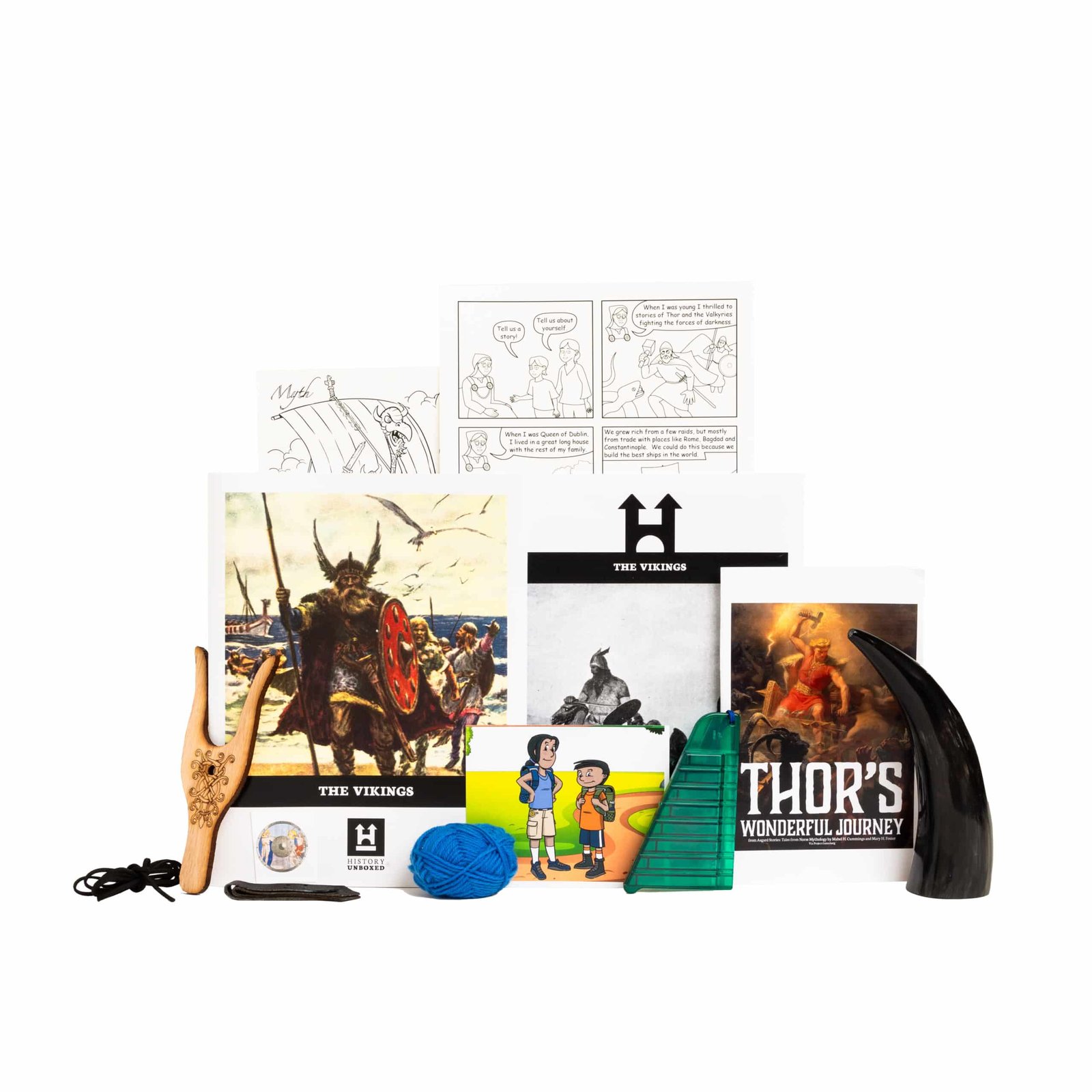
Inside This Box: Craft a leather holder for your authentic drinking horn Weave cord on a Viking Lucet Play beautiful music on Viking style Pan Pipes Read about Thor and…
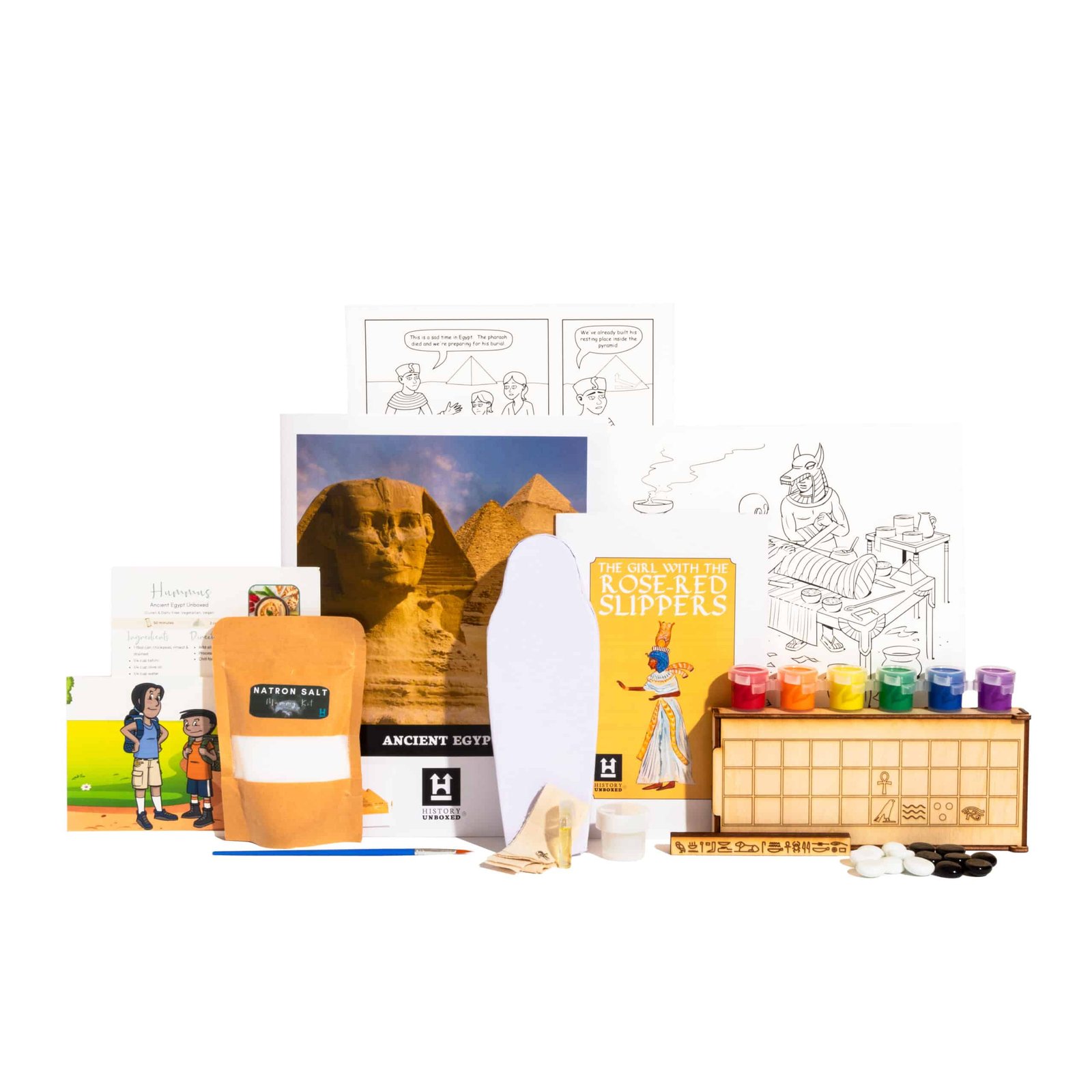
Inside This Box: Learn about the mummification process and why it was so important to the ancient Egyptians. Read a 4000 year old Cinderella story Play the world's oldest board…

Inside This Box: Weave your own laurel wreath Play Ludus Duodecim Scriptorum, an ancient board game Play a Latin card game Color a picture of Julius Caesar ...and more! Our…

Inside This Box: Paint a papyrus scroll Make a functioning sundial Enjoy a humorous Egyptian Gods Family Tree poster Learn about two of the most famous Pharaohs in Egyptian History…