


Assault Pioneers Imperial Game for Children (Sturmpioniere Reichsspiel für Kinder), board game for children, produced in Nazi Germany.
Nazi Board Games and Toys
Board games were a popular toy for children in the 1930s and 1940s. They were also used as tools of indoctrination. There were many battle-oriented games. For example, there was Sturmpioniere Reichsspiel für Kinder (Assault Pioneers Imperial Game for Children), which was emblazoned with Nazi symbols and encouraged children to take over areas by force. There was also Bomber über England (Bombers over England), a pinball style game produced in 1940 during the Blitz where children could air strike Britain. There was also Vereint-gegen den Feind (United Against the Enemy), another battle game, and Durch Kampf zum Sieg! (Through Struggle to Victory!) which allows children to participate in the Nazi’s 1933 rise to power.

Juden Raus! board game, 1936. The Wiener Holocaust Library.
While not produced by the government, anti-semitic games like Juden Raus! (Jews Out!) with the tagline “Auf nach Palästina!” (“Off to Palestine”) which was produced in 1936 found commercial success. In the game, players work to deport Jews to Mandatory Palestine. The first to deport 6 Jews wins. Ironically, the Nazis criticized the board game for trivializing Nazi policies.
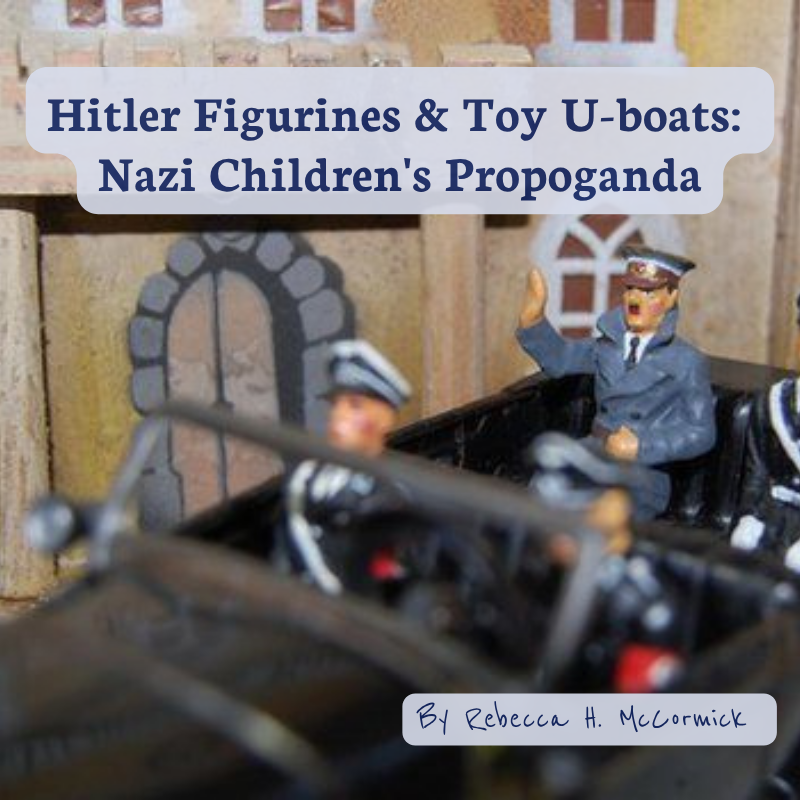
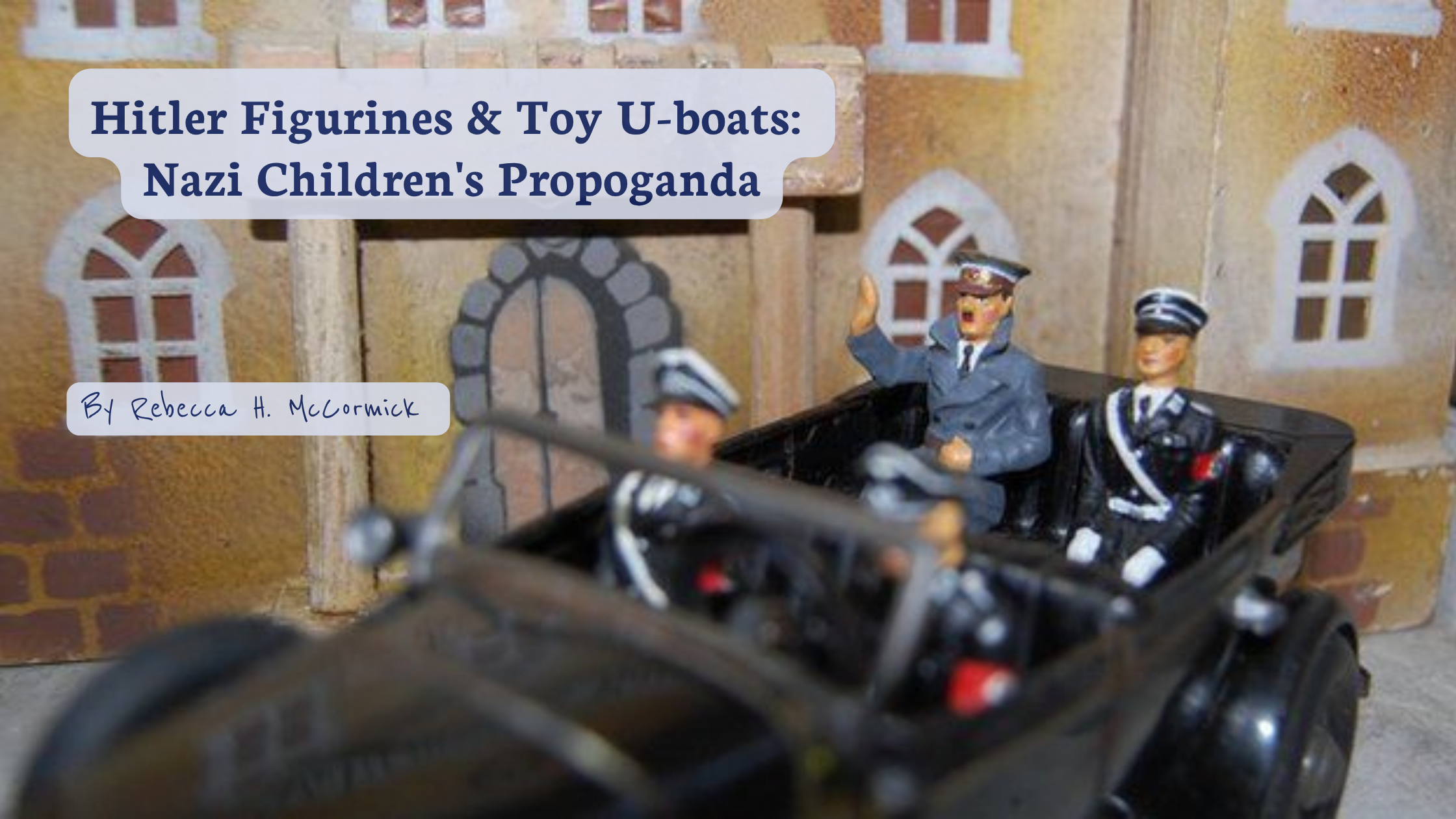
In addition to toys like tin soldiers, children could stage mock battles with swastika-emblazoned German U-boats and planes, complete puzzles depicting Stormtroopers guarding German villages, or have a smiling Adolf Hitler figurine with bendable right arm so that he could give a Hitlergruß, or Hitler salute. The Nazis were particularly sensitive to ridicule and passed an “Anti-Kitsch Law” shortly after gaining power which meant that products must be approved by the Nazi Party before being offered for sale, but many toys were still produced

Cover of Der Pimpf, December 1942.
Nazi Children’s Books
Children were taught Nazi ideology both at school and at home through children’s books. One of the most infamous of these books was Der Giftpilz (The Poisonous Mushroom) which is an allegory intended to scare children into fearing Jews who may look like Germans but are actually very dangerous. It was one of many anti-Jewish books produced in Nazi Germany.
Other Nazi children’s books reinforce the ideas of self-sacrifice and gendered ideals of how to be a good Aryan. For example, boys were encouraged to become soldiers defending the German homeland while girls were encouraged to focus on being a homemaker and having many children. Das Deutsche Mädel (The German Girl) was a Nazi propaganda magazine aimed at members of the League of German Girls, the girl’s alternative to the Hitler Youth. There was also Der Pimpf (The Boy), the Nazi magazine for boys which focused on action and warfare.
And we still haven’t even covered Nazi children’s songbooks!
Want to learn more about propaganda, Nazi Germany, and World War II? Check out 1940s Unboxed!